.webp)
Construction Chemicals
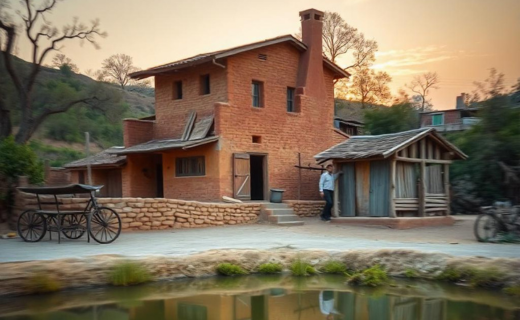
Building a village house in India's rural countryside is an enriching and rewarding experience that effectively merges traditional living with cultural heritage. The houses of the village, in addition to their main function—their use as living quarters, are a synonym of the simplicity, warmth, and harmony of urban life. On the other hand, the design of a village house is not a question of exterior attractiveness only but also demands well-prepared planning for its robustness, eco-friendliness, and convenience of living. A very important aspect, which is often neglected, is the issue of waterproofing without which it is impossible to extend the life of any rural construction, especially in various climate regions of India. Let’s look at five village house designs that can benefit not only the comfort but also the livability of people in the rural areas. Besides, they can also be modern and aesthetically pleasing while still having the structure intact against water such as the elimination of water leakage. Common among the Indian villages, especially in the states of Gujarat, Tamil Nadu, and Uttar Pradesh, the courtyard house is indeed a technology that has not gone out of fashion still. The house is built around the courtyard which is the center of the house and there we find the kitchen, living room, and the dining table. This courtyard plays a role in facilitating sunlight, natural ventilation, and family gatherings for various occasions. Features: The interior courtyard can meet the community needs of local teens, who might want to organize activities such as a book club, or the religious needs of worship and spiritual enlightenment of adults. Another advantage is that it allows free movement of cold and fresh air while at the same time, sun rays light up all the surrounding people and objects. Through the use of a modern but still a close fit for the traditional style, the house becomes visually attractive, energy-efficient, and a sustainable residence. The courtyard again acts as a natural cooling system that keeps the interior temperatures bearable, whatever the situation outside. Why Waterproofing Is Important? If there is a leak in the courtyard, then the water will reach the wall and the foundation by capillary action where it may cause mold, wood rot, or even health problems inhaled by the people. Leakage in the bottom of the courtyard and at the boundaries of the rooms makes the indoor space free from water damage and the people living there enjoy a healthy and comfortable environment. Kerala’s year-round hot and humid climate has created one of the most wind-and-rain-resistant architectural styles in India. The Kerala-type village house is famous for its gabled roofs, wooden ornamentation, and charming terraces. These very homes are highly practical and very stylish, and they are very good for places with heavy rainfall. Features: Spaced-out, tiled roofing for managing the rainwater effectively Music and space provided by broad verandas for sitting and community time Carvings in wood and columns are the primary decorations Higher plinth level so that water stagnation can be avoided Principle of Waterproofing: Among regions similar to Kerala in monsoon and rain, the important problem is definitely the one with the water which is still the result of the rain. Leakages and decay of wood structures must be avoided by proper waterproofing of walls, floors, and roof joints. Moreover, a waterproofing solution that has been well-done is going to provide protection from termites as well as structural timber decomposed microbes which, on the other hand, will certainly also increase the safety of both construction elements and the visual structure. Wadas are the ancestral homes traditionally found in the Indian state of Maharashtra, and they are the best examples of living spaces where generations intervene peacefully. Such massive buildings with different floors use materials that are found in the locality such as stone, brick, and lime mortar. They are also known to possess a grandeur look that is attractive and to have almost perfect layout of courtyards. Main Characteristics: There are several courtyards with a view for light, air, and interaction Warmth preservation with stone and brick masonry construction Rooms have an open layout with high ceilings and thick walls Ideal for big families or those who are co-resident with others Waterproofing Issues: One of the most significant problems that a Wada may face is the water that stagnates after the rain on the flat roof. It is the water from where the roof likely leaks. The flat part of the roof collects water. It is the part that has direct water infiltration. It is a subject to damage from the water on the surface. It should be covered by a waterproofing layer and if possible, it should have the right slope for easy removal of the water that invade the building. The Thar Desert House is built in such a way that it can deal with both. the relentless sun and the very dry conditions. Outwardly looking compressed, the homes are such that they barely cover the land, are very eco-friendly and yet very comfortable. They are mainly built of mud, stone or lime plaster that not only protect from the sun but also keep the building at a constant temperature and humidity level. Key Features: Smaller, inward-facing windows to protect harsh sunlight Thick walls for keeping fresh air and the resistance of heat Verandas and rollove for cooling through the natural convection Space-saving design to decrease the heat soaking effect Why Waterproofing Is Necessary: It is a fact that even there, in the desert, where no moisture is present, water use in bathrooms and kitchens can lead to leaks, while external plinths damage may be a cause of flooding and destruction of the building in monsoon. Utilizing the technique of waterproofing is an important measure in avoiding these damages. Goa is a prime example of the historical blend of the Portuguese and Indian elements in the field of architecture. These houses can be seen mainly in the coastal regions of Goa and Konkan which have an architectural design that takes advantage of the tropical climate, and at the same time an invitation to the relaxed lifestyle. Key Features: High ceilings and numerous windows for the air conditioning without energy Verandas and balconies of very large and large space for relaxation Red/brown clay squires or a trivial type of architectural fence Spaces for air circulation are provided by the absence of obstructions in the floor Waterproofing Solutions: In particular, the houses in areas near the sea are in great danger from the salty air, as it can degrade the metal parts and the concrete's strength. Waterproofing is crucial not only for the shelter and terrace but also for the protection of the reinforcement steel from corrosion. Preferably, the use of anti-salt waterproofing systems tailored to a specific need will secure the structural integrity for years. Q1: What are the main features of a traditional village house design? Traditional village houses are known for the materials they use, such as earth, rocks, and wood, almost all of which are locally sourced. They feature thick walls, sloped or flat types of roofs, and even open spaces like courtyards or verandas, which are used for causing the airflow or ventilation in the house in a natural way. Furthermore, these buildings are characterized by sustainable living, which implies a minimal environmental impact. Q2: How to make a rural house resistant to bad weather? The best thing to do is to choose the most resistant materials that are also compatible with the type of construction that works for your place. Design an efficient soxhlet extraction unit that will allow you to get high-purity solvent from a complex mixture. Besides, there are clothes that can be recyclable. The power extracted from the cord can be equal to the power consumed by a power plant. Q3: Is it possible to modernize the traditional village house design? Of course, the idea of a modern, traditionally styled village home is still valid. Exploiting modern facilities like solar energy, LED lighting, high-tech waterproofing, and upgraded sanitary ware is one way to green the house. The houses with open floor plans and automation add-ons would also fit the retro-chic image. The key is flexibility and practicality, together with a sense of tradition. Planning your greenfield heritage home is an intimate process that not only reflects your lifestyle but also heritage and climate. Undoubtedly, designing a pleasing home for you is quite crucial, but the use of waterproofing techniques is a must to keep the structure standing and durable over the years. For instance, buildings like Wada, still well-preserved, which pretty much look like the original, or homes in Goa that have been made to resort life, could use waterproofing in the best interests of parts such as the roof, the walls, courtyards, and wet areas in order to secure the comfort of the united family for many years. At 20MCC, we are experts in making use of innovative roof and wall water-resistant technologies configurable to both conventional and modern homes. Our waterproofing solutions are not just the barrier to water seepage, but they are as well the protectors of your house against issues like mold, corrosion, and climate for years to come. Are you ready to construct a solid and gorgeous rural house? Then get in touch with us now to find out more about our professional waterproofing services and make your home durable through every season.1. The Courtyard House: Blending Traditional and Functional Design
2. A Stylish Home in Kerala: The Beauty of The Design
3. The Wada House: Expansive and Regal
4. The Thar Desert House: Compact and Cool
5. The Coastal Goan House: A Blend of Leisure and Durability
Frequently Asked Questions
Conclusion: Design with Tradition and Durability in Mind


